
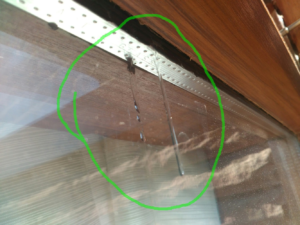
Butyl internal overflow(or creep of butyl sealant) is one of the most common hidden causes of insulating glass unit (IGU) failure. While often treated as a cosmetic issue, internal overflow directly compromises edge sealing performance, accelerates moisture ingress, and can ultimately lead to Low-E coating oxidation, fogging, and reduced IGU service life.
This article explains why butyl internal overflow occurs, how it can be minimized through proper production, handling, and installation, and why triple sealing spacers provide a fundamentally better long-term solution for high-performance IGUs.
What Is Butyl internal overflow in IGUs?
Butyl sealant is the primary seal in insulating glass, responsible for gas retention and moisture vapor resistance. Due to its permanent plastic (viscoelastic) nature, butyl does not cure like silicone or polysulfide. Instead, it remains flexible and responsive to pressure and temperature changes.
Butyl internal overflow occurs when the sealant creeps or migrates into the IGU cavity under:
- Temperature-induced pumping effects
- Wind load and glass deflection
- Atmospheric pressure differences
- Excessive mechanical compression
Once butyl flows inward, it cannot fully recover, creating a weak point in the edge seal and allowing moisture vapor to penetrate the cavity.
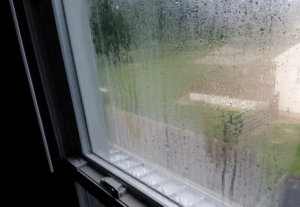
Why Butyl internal overflow Is a Serious Problem
Butyl internal overflow is more than an appearance defect:
- Creates permanent edge-seal discontinuities
- Allows water vapor ingressinto the cavity
- Causes Low-E coating oxidation
- Leads to premature IGU failure
- Reduces compliance with EN 1279, ASTM E2190, and IGMAdurability requirements
Main Causes of Butyl internal overflow
1. Production-Related Causes
In many factories, butyl is applied excessively to ensure a clean external appearance. This leaves no space for thermal or pressure-induced movement, making inner flow inevitable.
Key risk factors:
- Over-application of butyl sealant
- Excessive coating width
- Poor corner control
- Incorrect extruder parameters
Best practices:
- Apply butyl at ~4 mm widthon a 5 mm aluminum spacer, leaving controlled expansion space
- Control extruder parameters:
- Temperature: 110–130 °C
- Pressure: ~20 MPa
- Speed: ~35 m/min
- Maintain 3–4 g/m per sidecoating weight
- Properly knead spacer corners to avoid sealant accumulation
2. Storage and Transportation Issues
Even correctly produced IGUs can develop internal overflow due to improper handling.
Common mistakes:
- Packaging before secondary sealant is fully cured
- Uneven stacking and point loading
- Packing straps applied directly to glass
- Glass movement during transport
Prevention measures:
- Allow IGUs to cure at least 48 hoursbefore packing
- Use cork pads with even spacing
- Secure straps to crates, not glass
- Prevent vibration and localized stress during transport
3. Installation Errors
Excessive mechanical compression during installation is a frequent trigger of butyl creep.
High-risk scenarios:
- Over-tightened curtain wall pressure plates
- Door and window glass clamped without thermal expansion allowance
- Undersized or overly thin glass panels
Solutions:
- Apply moderate, uniform pressure during installation
- Design glass thickness based on deflection and wind load calculations
- Follow safety glass and façade engineering standards
4. Environmental and Climatic Effects
Even under ideal conditions, IGUs are subjected to unavoidable external forces.
- Temperature changescause cavity gas expansion and contraction (pumping effect)
- Wind loadinduces significant glass deflection
- Altitude differencesalter internal and external air pressure balance
These forces cause repeated bending of the glass. Because aluminum spacers are rigid and butyl is flexible, the sealant gradually creeps inward, leading to long-term internal overflow.
Why Triple Sealing Spacers Are the Best Solution
While traditional dual-seal IGUs rely heavily on butyl to maintain cavity integrity, triple sealing spacers fundamentally change the sealing system architecture.
Advantages of Triple Sealing Spacers
- Three independent sealing barriersreduce reliance on butyl alone
- Improved resistance to pumping effect and pressure variation
- Lower stress concentration on the primary butyl seal
- Significantly reduced risk of butyl internal overflow
- Enhanced long-term durability and gas retention
- Better compliance with high-performance IGU standards
By distributing sealing functions across multiple materials and interfaces, triple sealing spacers minimize sealant creep, even under extreme temperature, wind load, or altitude conditions.
Conclusion: Prevention Is Better Than Repair
Butyl internal overflow in insulating glass cannot be completely eliminated due to the material’s permanent plasticity. However, it can be effectively controlled and minimized through:
- Precise butyl application during production
- Proper storageand transportation
- Correct installation practices
- Engineering-based glass design
- Adoption of triple sealing spacer systems
For modern high-performance IGUs—especially in large sizes, high-rise buildings, and extreme climates—triple sealing spacers are the most reliable solution to avoid butyl internal overflow and ensure long-term insulating glass performance.